To those of you who know teachers, I should warn you that many teachers take umbrage at the suggestion that summer break is one long lazy period for them. Many point to how they take classes to better themselves, or do second jobs to augment their meager income. They point to needing to constantly working toward their recertification. Others will frankly say that they NEED summer break to pick up the shattered pieces of the psyche systematically destroyed by students over the course of the past nine months.
I am none of those teachers. I have no reason to doubt them, but I do not typically use summer to better myself, to recover psychologically, or work toward recertification. I have occasionally unwillingly used it to augment my income, but not out of any greater need than my love of video games and geeky decor. My summers, generally, are a haze of rising just barely before noon and playing video games until well after dark. On my more industrious summers, I have also tried to make headway on my writing projects.
Well. This summer, I decided I was going to be more intentional about things. I was going to set aside time to read, to write, to draw, and to exercise. I was going to lose thirty pounds. I was going to learn the mandolin. I was finally going to finish The Teutonic Doctrine. And, inspired by my little sister’s example of reading 40 books last year, I was going to plow into my unread stack like an avenging fury.
Well. I didn’t finish Teutonic Doctrine. I only lost about 15 pounds, though I’m still pretty proud of that. I learned a few songs on the mandolin, at least to my own satisfaction. And I did, as it happens, read quite a lot, and I thought I’d do a blog on all the books I read, akin to the “What I’ve been reading” entries I used to do.
Memoirs of Ulysses S Grant
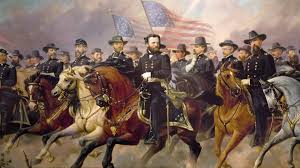
I wrote about this elsewhere, so no point in repeating myself. It’s clear reading, though I think it might benefit from some maps and illustrations.
Wondla series
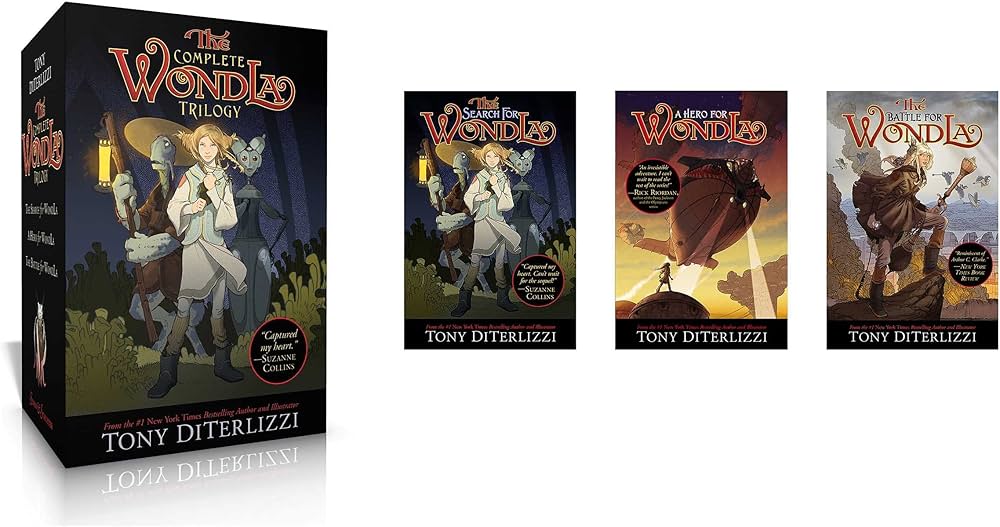
I was a fan of The Spiderwick Chronicles, so this sci-fi series by the artist Tony DiTerlizzi attracted my attention–attracted it as far back as 2006, in fact, when I read the first book, The Search for Wondla. I never had an opportunity of reading the next two–A Hero for Wondla, and The Battle for Wondla–until just recently. Loosely inspired by L. Frank Baum’s Wizard of Oz (The “Wondla” in the series title is eventually revealed to be a confused version of the book’s title and author), the series is exactly what you’d expect from an illustrator–wildly imaginative, beautifully picturesque, perhaps a bit thin, plot-wise, but with a fair amount of heart. The book also features some beautiful illustrations which show an amazing world. At some point, I should probably look into the animated series that just got released–first glimpse seems like the animation is disappointingly simple, but the broad strokes look interesting.
Queen of Nothing
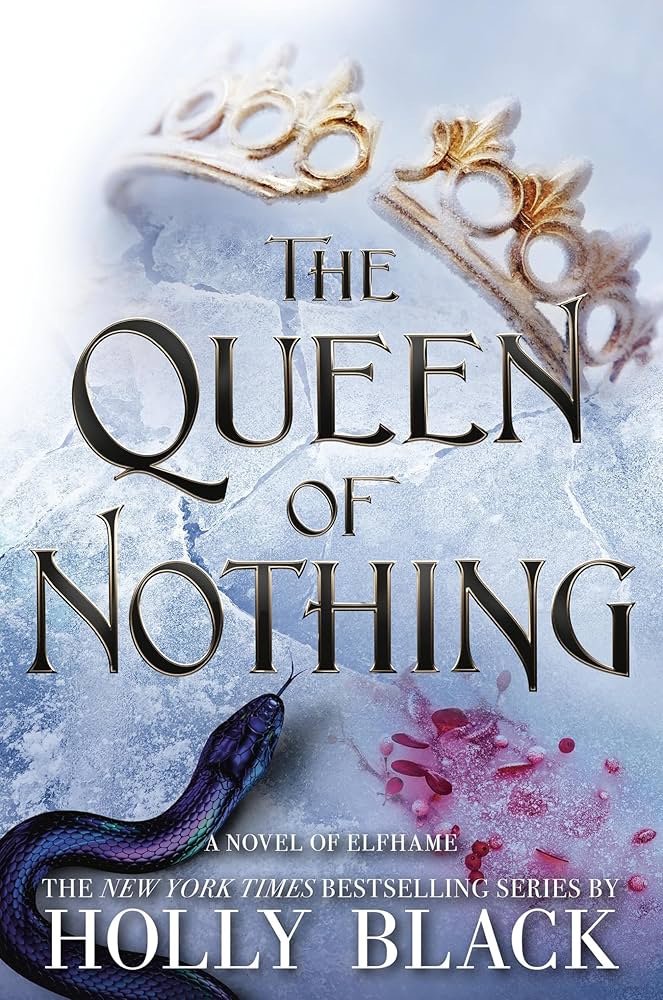
Continuing with my interest in The Spiderwick Chronicles, I noticed this book by Holly Black, the other author of that series, and picked it up out of my own class library (must have been left by the previous teacher.) It’s actually the fourth or fifth book in the Folk of Air series, so I guess I chose a lousy place to jump into the series, but it recapped itself well enough, and I got to read a happy ending. Black’s enthusiasm for fairy tale and folklore is well-served here, and though the main shape of the story is a fairly normal “romantasy” story (“ooh, the heroine totally doesn’t love this dark elven prince character who betrayed her in the last book, she’s just going back into Elfland for pragmatic reasons” okay sure), it’s a fun and engaging story. I’m tempted to look at the others–apparently it goes on to talk about her children.
The Thrawn Trilogy
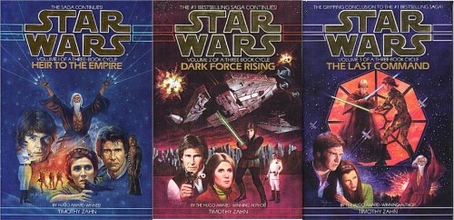
This was a new one for me, though I’ve written about other works of the author, Timothy Zahn, before. In college, my roommate Scott was a big fan of the Star Wars Extended Universe (or “Legends”, as Disney calls them now), and told me a great deal about all the additional written material there was to Star Wars–stuff like Jacen Solo and the Yuuzhan Vong and Luke’s new redheaded Sith girlfriend Mara Jade. And he told me about Thrawn, who he called “the best Star Wars villain ever.” So when I saw the Thrawn Trilogy sitting on the shelf at my local comic book shop for 5 bucks apiece, I figured it’d be fun to look into this bit of pop culture history.
The books are fun, though like Star Wars itself, full of happy coincidences that end with the heroes overwhelmingly winning unambiguous victories. Thrawn’s genius seems a bit overblown–he basically has author-induced foresight into what his enemies will do, which he explains by his love of art. But he is certainly a breath of fresh air in his calm management style.
Mostly I bought and read the books because I’m intrigued by this forgotten period of pop culture–this period when very little in the Star Wars universe was set in stone, when writers could more or less make up stuff based on loose hints from the movies. The “Bothan” here are a race of furry aliens very good at spying, not an alliance of black-market information brokers. Clones aren’t Mandalorian troopers, they’re homicidal, almost subhuman killers. It’s fascinating, seeing how Zahn decides to take various cues from the series and add his own twist into what is, essentially, a professionally written fanfiction. And it’s a shame, though probably inevitable, that Disney decided to chuck it all.
Though considering they brought back Thrawn for the Rebels show and later Ahsoka (which even used the tagline “Heir to the Empire,”) I have to wonder if Mara Jade will make a reappearance at some point, given Disney’s interest in Strong Female Characters.
Pink Fairy Book
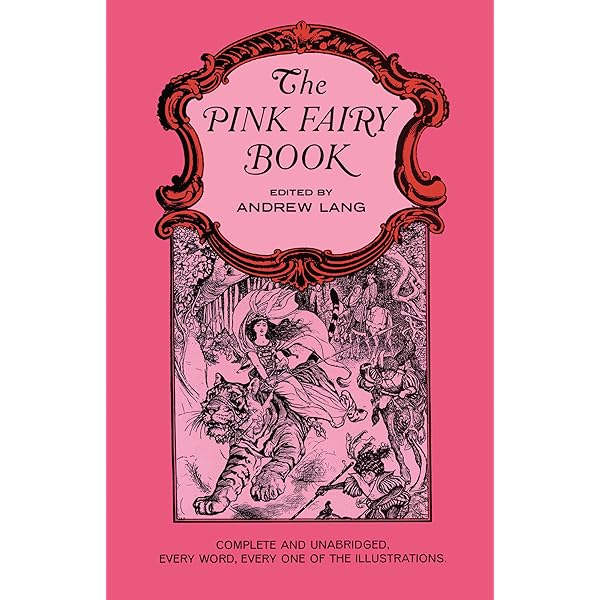
Not much to say. I’m building up my Andrew Lang Fairy Tale Book collection (this is the eighth I’ve collected) and I read through it the collection of assorted fairy tales from around the world. It’s good. My neice enjoyed the story of the Ice Queen and the one about the cat who fell in love, but my neice loves all stories.
Someone You Can Build a Nest In
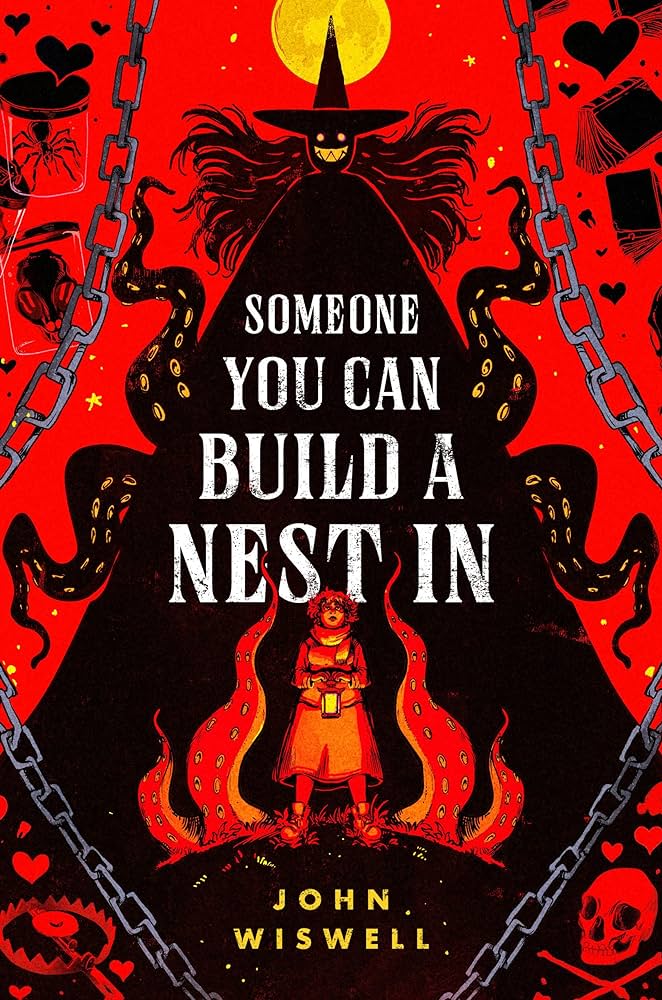
My school has a book club, and this was the book we were finishing up at the start of summer. Premise is a fantasy blob monster (like the alien creature from The Thing) falls in love with a naturalist whose family they might have cursed to death. Also the local village is trying to murder the blob monster for reasons.
The book’s big selling point is that it’s supposed to be a “neurodivergent” love story, where the blob monster just thinks about things differently but… I was actually pretty underwhelmed by that aspect. It was an intriguing enough story, and sort of fun, but the blob monster actually behaved like your standard “dorky introvert” love interest. Their thought style was virtually indistinguishable from a typical teenage girl blogger. There might be potential in exploring how a formless blob would interact and think about the world, but this didn’t seem to really take advantage of that idea.
Kings of the Wyld
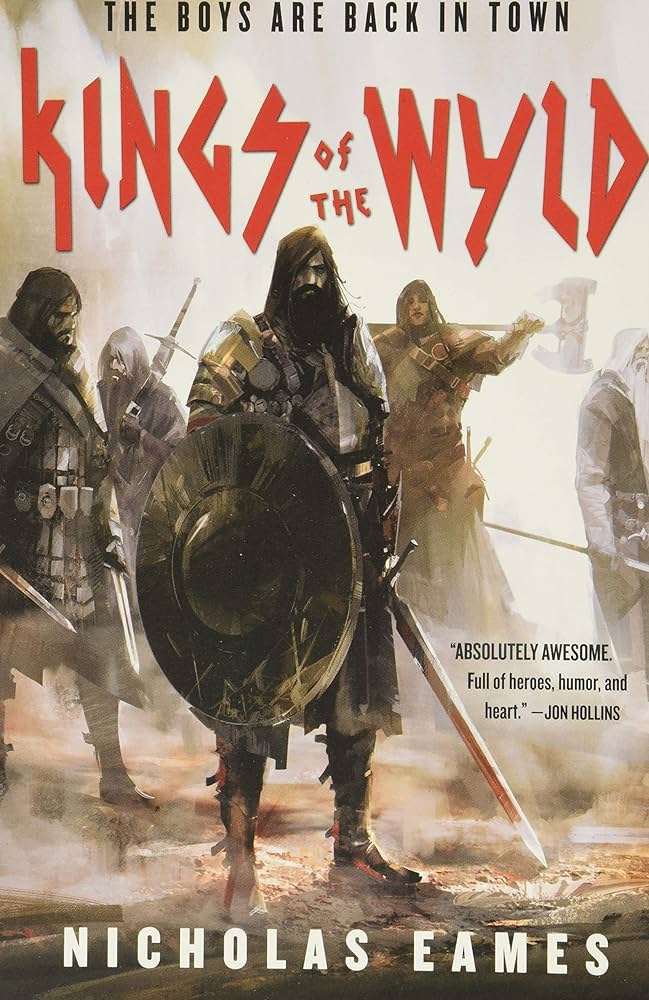
This was the next book we read. Best way to summarize it is “A Midlife Crisis Fantasy DnD Adventure.” That sounds like I’m making fun of it, but I actually really enjoyed this story of old heroes “getting the band back together” to go and rescue one of their daughters from a beseiged city. It’s good old-fashioned swashbuckling action, akin to the sort of 70’s pulp fantasy books you used to see everywhere. The worldbuilding is solid, the writing is tight if exposition heavy, and the emotional stakes are real.
A part of me was… disconcerted that despite all the emphasis on the heroes being so very, very old, they seemed to be actually just around 40 or 50 years at worst. That’s not that old, guys!
Strong Poison
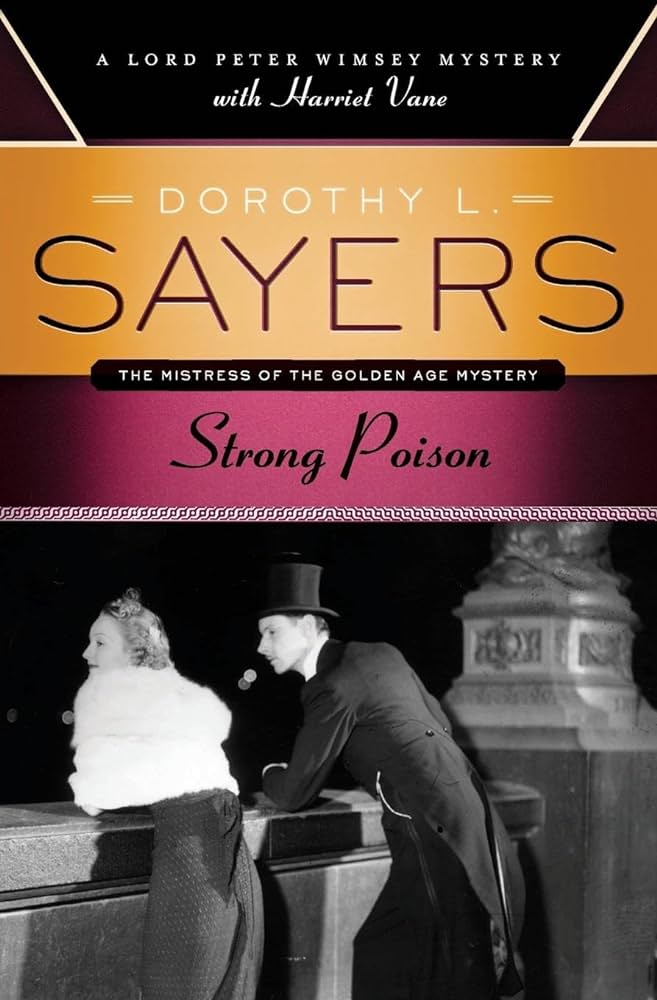
I’ve known about Wimsey since high school–a close friend of mine at the tim, Jim, admired him greatly, and my first English professor in college was a massive Sayers fan who had her whole class watch Gaudy Night (also both my sisters deeply enjoy a good murder as much as the next lady)–but I never really read many of the books. I wanted, though, to read the story where he first meets his love, Harriet Vane, and proves her innocence, though gets rejected.
It’s an odd story, and not at all what I would have expected from (what is generally agreed to be) a self-insert romance. Like, there’s very little romance at all. Lord Peter falls in love with Harriet at first sight and… then the two have exactly three scenes where they speak together, and they only really seem to connect during one of them, where Peter pitches his idea of the murder as a plot for a novel. Harriet herself doesn’t actually do a lot, and they talk more about her dead ex-lover, Philip Boyle, than her.
The story isn’t really about romance (indeed, it is explicitly a rejection of the white-knight-rescuer-romance). It doesn’t really even seem to be about Harriet–though Wimsey is constantly thinking about her, she doesn’t actually get explored much. If anything, it’s about the failed relationship between Harriet and Boyle. (Perhaps because Dorothy Sayers was herself in a similar relationship at one point.) That’s what the bulk of the story talks about, what all the characters focus on, and, of course, it’s the central murder at the heart of the story. It’s an interesting choice, to say the least.
The Adventures of Lord Peter Wimsey
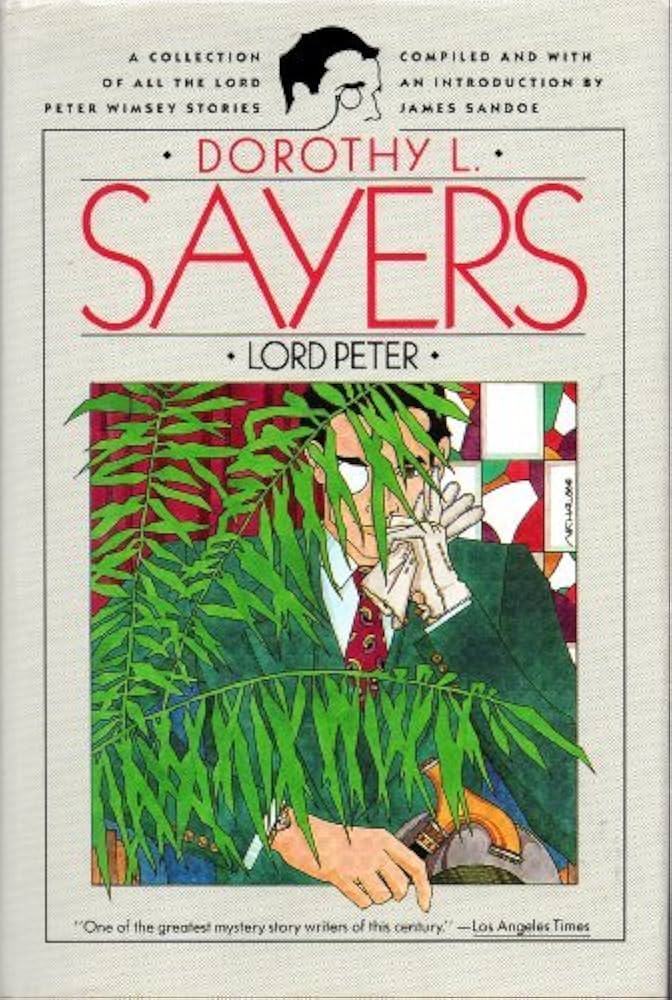
Technically this is an anthology of short stories of Dorothy L Sayers’ famous monocled 1920’s detective. I actually thought it was a collection of the novel length stories, since I wanted to read the other Harriet Vane stories–To Have His Carcase and Busman’s Holiday (I read Gaudy Night in college). Alas, no, but a collection of anthologies at least gives me a broader overview of how Lord Peter changes over the years. And a good number of these weren’t even murders, just pranks or robberies or things like that.
I’m at that stage of familiarity now with Sayers where I confidently assume I’ve “figured her out” and have all sort of “theories” about why she writes Wimsey the way she does. Foolish, because I’ve not read most of her novels, or any of her scholarship. My knowledge is extremely surface-level.
Here’s what I will say. Looking at the short story collection, it’s astonishing how often a version of “Harriet Vane” shows up before Strong Poison. By which I mean, there seems to be an ongoing theme in Lord Peter Wimsey stories of an intelligent and capable woman who’s made mistakes and ended up attached to, or in the power of, a rich but corrupt and pathetic man. That is, I grant you, a broad category, and probably isn’t as important as I’m imagining it to be. But it makes me wonder, and I’m tempted to write a blog about it.
The Anxious Generation
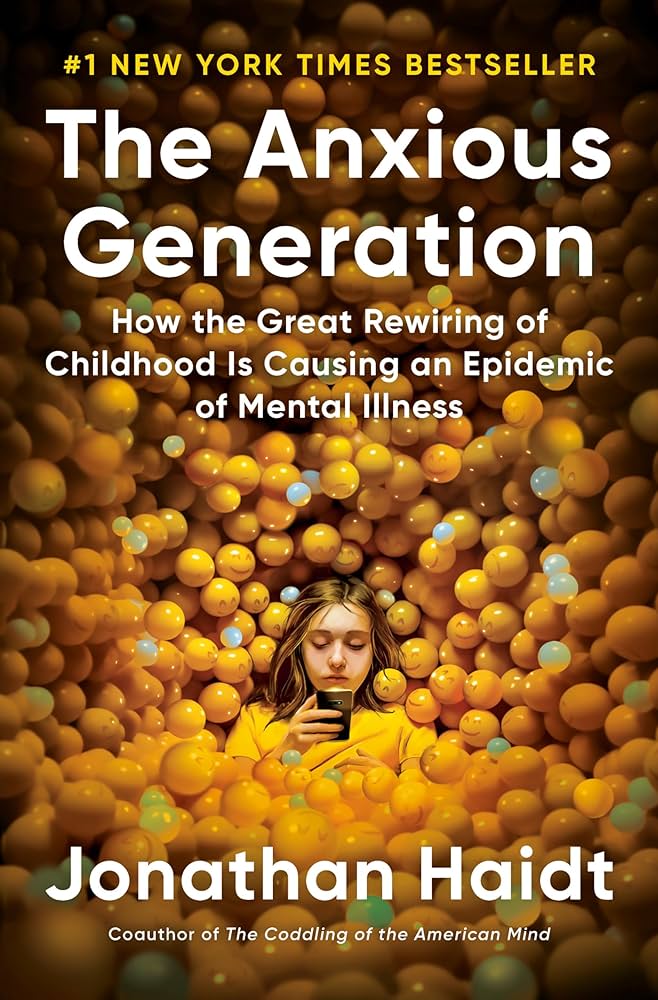
This book has attracted attention in other quarters. Its writer, Jonathon Haidt is a social psychiatrist who’s been interested in the impact of social media on politics, which led him to discover, almost by accident, the massive mental damage its been doing to youth across the globe. He’s still planning on writing the politics book some day, which, if it’s anything like this, should definitely be worth reading.
Some particularly intriguing chapters are the ones on the distinctions between technology impacts girls vs. boys, and the other one about the psychological benefits of spirituality. Haidt is a very secular atheist psychiatrist, but despite that, he doesn’t attempt to deny that there are marked differences between how boys and girls use electronics and what they want. Boys, he says, want agency and turn to video games and pornography, leaving them with a false sense of ability that turns hollow, often leading to suicide. Girls, though, desire community and use social media, which for a variety of reasons leads to mental issues. It feels refreshing for a psychiatrist to finally admit there are real, distinct differences between how men and women think. It’s equally refreshing for an atheist to acknowledge that religion and spirituality fulfill a crucial part of our lives and we need spaces clear of electronic devices. I’d love to unpack these ideas in more detail elsewhere. Maybe a later blog.
The Gift: Creativity in the Modern Era
I can’t remember why I picked this book up. A recommendation I saw on Twitter, I think, back when I was in grad school, recommending it as an excellent resource for understanding a modern Christian attitude toward art and artistry. Took me forever to get around to actually reading it.
A bit underwhelming, honestly. Some really fascinating stuff about how many cultures view artistic ability as a divine gift, that, conversely, grows when you give of it to your surrounding community. Also some intriguing notes about how the CIA used modern art to undermine fascism (though that’s a separate book). Yet overall, it’s big on very dense and heavy on speculation. The two chapters on Walt Whitman and Ezra Pound, though possibly necessary to zoom in on a topic that’d been discussed chiefly in general terms, were especially slow and hard to get through–though I’ll admit I learned things about both people (I had not, for instance, ever heard that Pound was a big fan of Mussolini)
One interesting link–the author seems to be gently advocating for the idea that artists ought to be supported by the state, as art is best when it is freely given to people, but also, obviously, artists need to eat. I call this interesting because this same idea showed up in Strong Poison as the private obsession of the murder victim, who unlike his detective-novelist girlfriend was an unsuccessful artist. Harriet Vane (and Dorothy L Sayers by extension) seem to take a dim view of such state-sponsored writing.
Jesus and John Wayne
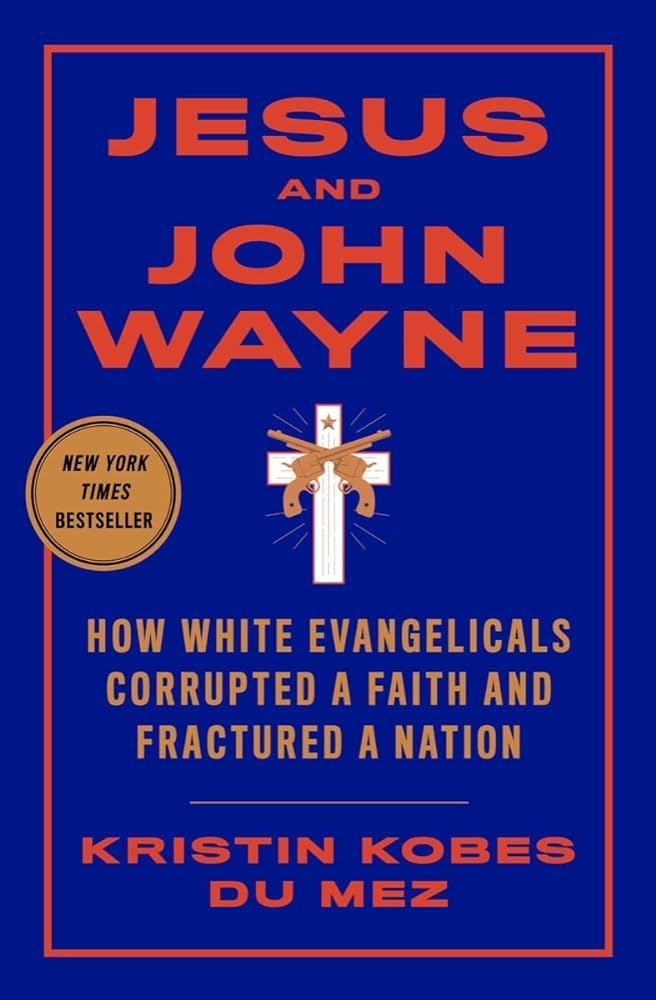
I think I bought this two or three years ago–possibly earlier. Another book that it’s taken me forever to actually get around reading. I’ll admit I was skeptical just from the title–I certainly didn’t hear much about John Wayne growing up, and when I did, it was from a youth minister who was very clear that John Wayne was not someone to be emulated. So I was dubious of the thesis that Christians had formed an extra-biblical attachment to John Wayne.
Of course, Du Mez’s point is a bit more complex than this. Her title, in fact, is taken from a Gaither Vocal Band song entitled “Jesus and John Wayne“–which did indeed list Wayne’s poor qualities of misogyny and racism, in the context of Jesus needing to “balance” out the sins of the still-manly Wayne. It is the end of a long line of gradual accretion where Cold War politics and ambitious power-brokering radio influencers brought evangelicals gradually into a love affair with strong-man politicians, particularly of the Republican variety.
Not all of Du Mez’s points are persuasive, and I was inclined to dispute with her characterization of some parts of the evangelical movement. However, her picture of Dr. James Dobson was all too familiar, and the many quotes she brings from various “manly” preachers obsessed with restoring “true masculinity” are fairly damning evidence. The difficulty, as a friend of mine pointed out, is that while Du Mez does a good job of uncovering a mindset within evangelicalism that most Christians would repudiate, she views herself as a historian, not a theologian, and so even while the epilogue of her book recognizes that evangelicalism is a good movement, she shrinks from arguing for what a positive view of manhood should be, leaving a notable gap. Hopefully, one of the other books I’m currently reading, The Making of Manhood, should help in that area.
Well. My not-so-humble bragging is at an end and so, unfortunately, is the summer. Hopefully next summer I can do more writing and less reading–while I enjoyed the thrill of reading so much, I would like to move back toward a more creative vein. But alas, before that can even be contemplated, I must resume the long struggle of educating.
 The Solomon Code
Hey, John, nice to see your blog again.Congratulations on the 15 pounds! I liked reading about the books you’ve read.I’m glad you could read the Lord Peter Whimsey. I’m reading those too now. Ugh the one about the copper fingers!! I guess the movies make more of their relationship. He’s trying to help her get through the ordeal. I’m interested what the Jesus and John Wayne book said about James Dobson. I never heard that he was unfaithful. Hope your getting a good regimen set up with your classes! Mom
Sent from AT&T Yahoo Mail on Android
LikeLiked by 1 person
The one with the copper fingers is super disturbing!
LikeLiked by 1 person
The copper fingers one is super interesting, actually. I would say that’s definitely one of the stories where you get a “Harriet Vane”-like figure–the talented woman stuck in a bad relationship with a mediocre (and criminal) artist. Only here, of course, Lord Peter is unable to save her in time. It’s a story very in the mode of a gothic horror story like Poe or Hawthorne would write, which by itself is very unlike all the rest of the Lord Peter stories, so I’m curious as to what led Sayers to write a story so unlike the rest of her canon. It might just be that she learned about the process, and thought it would make for an intriguing murder, but I wonder.
LikeLike
came back here to say that I never thought of the copper fingers one that way!!! It is wild how different some of the short stories are
LikeLike