Hey! Goodreads is doing giveaways again! Most importantly, of my book, The Hospitaller Oath, the second book in the Solomon Code series! Supplies are limited, but if you enter in the next week, you still stand a chance to win a free copy of the book! Apply here!

Well, I can’t just have a blog post about just that, now, can I? Let’s see, what else do I have to mindlessly run my mouth about?
Ah.
So a while back I wrote about how I was practically the last person in my circle of acquaintance to actually read the stories of Lord Peter Wimsey by the famous novelist Dorothy L Sayers. I also mentioned how with typical arrogance, I was quickly approaching the “I’ve got this writer all figured out” level of familiarity.

I almost definitely DO NOT have Sayers “all figured out,” I certainly can’t claim to have all “female writers” figured out. But I do think there was an insight in Haidt’s book The Anxious Generation that has really helped me pinpoint a critical distinction between how male and female writers approach detective fiction. I should preface this, though, by saying, that my knowledge of detective fiction is far from exhaustive, and that my theories are mostly limited to three writers that I do know in detail–Arthur Conan Doyle, Agatha Christie, and Dorothy L. Sayers.
The insight, which comes from a book remarkably unrelated to fiction or murders–Jonathon Haidt’s The Anxious Generation. Haidt, a psychiatrist, in a chapter dedicated to the differences in how cell phones impact youth of both genders, makes the underrated observation: “While male and female brains are largely indistinguishable, psychiatrists have long agreed that males tend to be focused around agency while females are more geared toward community.”
Psychiatrists may have long agreed about this, but it certainly seems like they’ve kept as quiet as they possibly can about the mental distinctions between genders in recent years. Certainly I never heard much about this at grad school, where the generally accepted position was that there was no difference whatsoever between how men and women thought about things, or about how they wrote.
And really, I get it. After all, these tendencies don’t apply toward everyone (I could have looked at GK Chesterton in regard to these, but Chesterton’s excellent Father Brown stories are written with a wholly different goal to being with); they could only ever be considered statistical biases. Haidt himself offers the theory that they are at least partly a matter of cultural upbringing, and certainly no such tendency would make a person’s writing more or less valid. It’s understandable–commendable, really–to be wary of forcing a reading upon an author, of seeing what you want to see because of your own biases–like how Freud triumphantly decided that Shakespeare must have secretly wanted to murder his father.
But hey. I’m no longer an academic. I’m just a high school teacher who posts ramblings on the internet. I can be as uncautious as I want!
And I do think that when you look at how Agatha Christie and Dorothy L Sayers approach murder and detectives, and how Arthur Conan Doyle approaches murder and detection, you see a marked difference, on the one hand between a striving for community, and on the other a striving for agency.

Arthur Conan Doyle’s Sherlock Holmes is very much the model of the modern man, independent and fully in charge of his own destiny. A brilliant mind on a prizefighter’s body, with an encyclopedic knowledge of literally every possible fact there is to know, Holmes is a man bursting with every form of power, self-sufficient with no obligations or impediments, fully able to work his will on his surroundings. Even his rude manner fits well–Holmes has the agency to say exactly whatever he wants, even if it means he has less friends–a smaller community–to connect with.

Now it’s important not to get carried away with our theory, here. Holmes may be rude by the standards of his society, but he still has a strong community of his own. He has a network of street informers, Inspectors he frequently works with, the indominatible Dr. Watson, and an implausible circle of chance acquaintances that he is always running into on cases. However, I would offer the stipulation that Holmes just as commonly uses these colleagues, who are less his friends than his work comrades. With the exception of Watson, he is not tied down to any of these people and would not risk anything for them especially–only for his own enjoyment.
Contrast this with someone as far away from Holmes as you can get–the redoubtable Ms. Marple by Agatha Christie.
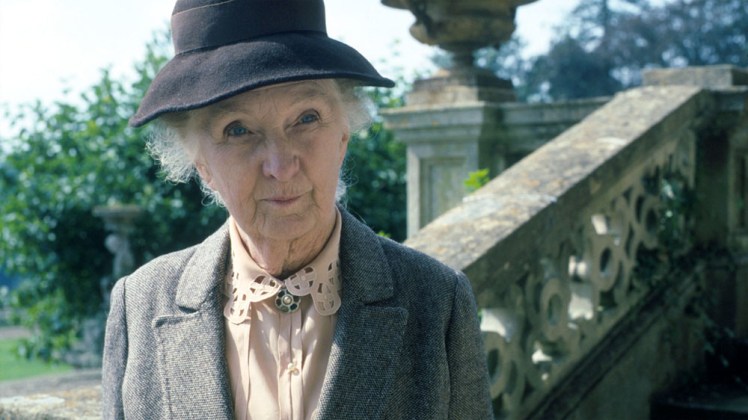
Ms. Marple, of course, is designed to be an atypical detective–she is not strong, she is not hugely knowledgeable (except on matters of the heart), she does not have a library of the poisons used in the Ganges Delta. She has little money of her own, no fame, no power to speak of. She has little agency. But what she does have, in spades, is community. Ms. Marple knows everything there is to know about the ins and outs of her village of acquaintances, most of whom are charmed by her polite manners and whimsical style. She uses this network, as Holmes does, to help check alibis and investigate crimes, but she is invested in her network of friends in a way that Holmes is not.
The story “Body in the Library” demonstrates this most clearly. The murder of a lady that no one recognizes, inside the home of one of Ms. Marple’s friends, spurs the spinster into action. As the crime develops, Ms. Marple realizes how it links with other, seemingly unrelated crimes in the village. Even people like the village idiot turn out to be crucial parts of the investigation. But most of all–Ms. Marple is determined that the true killer be found–not so that “justice can be done” or because her friend is in any real danger of being convicted of the crime–but because as long as the mystery remains, her friends will be shunned by the community. Ms. Marple fights not for her own agency, but to restore the health of the community.
Then there’s the story “Curtain” which tells the story of the last case of Agatha Christie’s other famous detective, Hercule Poirot.

Poirot, a person with certainly more agency though perhaps less community than Ms. Marple, in this case does not work to clear the name of a friend beyond all doubt, but he does work to restore the health of a community. In this case, by ridding–violently–the community of a bad actor who uses psychology to set people against each other. It is a bit too juvenile to read this as Poirot killing off the “gossiping mean girl” of the community. Rather, this is a opponent beautifully diametrically opposed to Poirot’s own psychology-centered detective method. Still, Agatha Christie clearly has as her “ultimate enemy” someone who destroys community, and her hero as one who restores it.
Most of Agatha Christie’s stories, when you read them, are designed the same way–they present the reader with a small micro-community, a cast of characters and potential murderers. This community is thrown into disruption by the act of the murder, and either Ms. Marple or Hercule Poirot or one of her other characters solve the crime by gently cajoling revealing answers from the various members of the community. At the end of each story, they are the stars, sometimes treated to a triumphal parade of the various members of the community each assuring them of how grateful they are to the detective. (The obvious exception to this rule is Murder on the Orient Express, but people familiar with that story should already realize how it displays the strength of a community).

It’s easy to say “well, that’s just how murder stories are,” but consider that Holmes murder stories are not, in fact, designed this way. Holmes’ mysteries are very tightly contained affairs with limited characters where often the murderer does not even appear until the very end, after Holmes has caught them red-handed in the act and forcibly arrested them. His stories end not with a parade of thankful friends, but more often with him bragging to Watson about how he figured out the whole thing on his own.
Also too, consider that Holmes is rarely concerned with the question of the reputation of his clients, with their standing in the community or whether there will be lasting shame from the crimes he reveals, for good or ill. One thinks of the case of the Blue Carbuncle, where Holmes is not in the least bit interested with the guilt hanging over the men he knows are falsely accused, but is almost lazily certain that now that the gem has been found, the rest will be cleared up soon. Whether the men will be cleared but regarded in the community as thieves for the rest of their lives is not something that Sherlock Holmes seems to even consider worth pondering. The only really important thing, to him, is that the case has been solved; he, Holmes, has gotten his entertainment out of it. The fact that people’s lives and deaths are involved do not trouble him in the least, much less their reputations.
Meanwhile Dorothy L. Sayers’ Lord Peter Wimsey, a man who seems superficially very similar to Holmes, has something of the opposite problem.
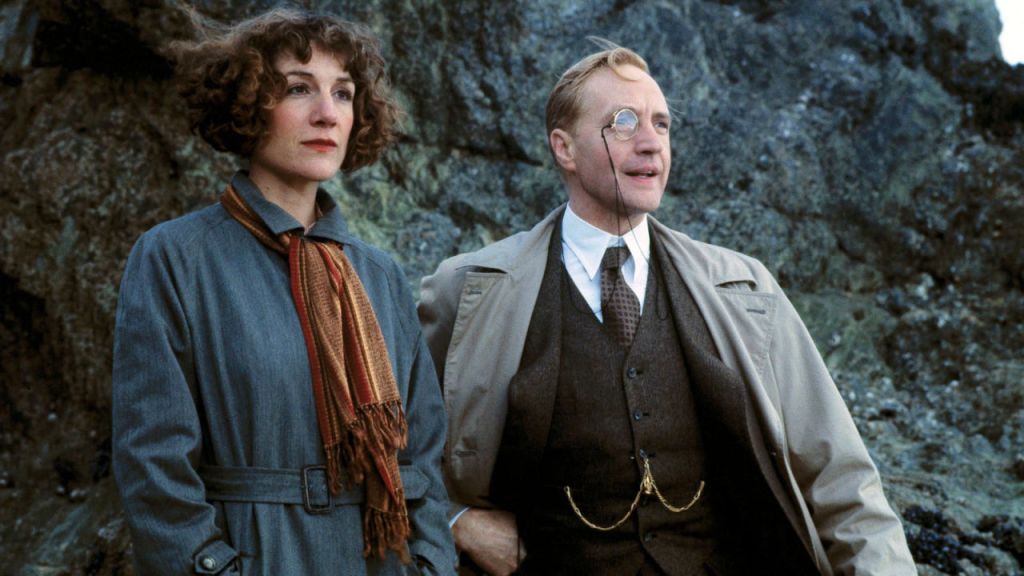
Wimsey, like Holmes, is powerful, full of hidden talents, possessed of encyclopedic knowledge, (as well as being fabulously wealthy.) Wimsey, like Holmes, indulges in crime-detection as a source of entertainment. Yet while anxious to definitively decide the innocence of others, Wimsey is curiously–almost bizarrely–reluctant to bring the guilty to justice. The best explanation Wimsey can provide for this is that he feels like an “intruder” of some sort–the meddling aristrocrat who’s mucked things up for the hardworking criminal mastermind. And again, the chief motivation that causes Wimsey to overpower this reluctance of his and bring killers to justice is that an innocent person will not be charged–that the danger to society be healed. A lot of Dorothy L. Sayers’ novels revolve around proving the innocence of a person. (Of course, many noir detective stories revolve around this too, but more often that is a setup to show how effective the detective is at working independentally against the system). In short, Wimsey is a detective with great agency who is primarily concerned with the repercussions of that agency on the community.
Again, this concern with community shows itself in the shape of the stories. Each Wimsey story involves Wimsey (or Harriet Vane, his love interest) stumbling into a new town, or at least new societal circle, that has been recently rocked by a murder. Wimsey (or Vane) need to navigate this new community and discover the killer. It’s very similar to Ms. Marple, with the exception that psychology is not usually the key factor–Dorothy L. Sayers has a fondness for convoluted puzzles, with the killer having planned out a perfect alibi, that Wimsey must carefully unravel, usually with the realization of a niche factoid or hobby that another member of the community will mention to him.
The most obvious example of this is Busman’s Honeymoon, a story almost more about Harriet Vane’s hometown than it is, really, about the particular murder. Half of the story is about getting to know the various figures within the town, and the final crucial realization comes not from Wimsey, but from one of the village people they have befriended. Whose Body is another case, and Murder Must Advertise follows a similar plan, albeit instead of entering a small town, Wimsey is infiltrating an advertising firm and getting to know the various members of the company. The Nine Tailors, perhaps, has the best example of Wimsey uncovering the truth of a matter by getting closely involved with the community, as that is a mystery deeply interwoven with an old story that everyone in town needs to give an opinion on.
It should be noted that Wimsey’s short stories are a different matter, and rarely have the time to depict an entire community (though some, like “The Haunted Policeman”, do show a moderate gathering of people). Those are usually solely devoted to Sayers’ love of puzzles, and focused on something like French pronouns or crosswords. I could draw some conclusions about that, but it’s probably best to keep my blogs limited to one unwarranted assumption per post. Suffice to say that even in these cases, what is emphasized is not Wimsey’s power and independence, his “agency,” but rather the puzzle itself–how wines differ from each other, or how light changes the color of spaces, or even the nature of bookbinding. I would say the only ones that are truly demonstrative of Wimsey’s “agency” are “The Abominable History of the Man with the Copper Fingers,” a curiously morbid tale for Sayers; “The Incredible Elopement of Lord Peter Wimsey,” where Wimsey uses his performance skills to rescue a woman, and “The Adventurous Exploit of the Cave of Ali Baba,” an almost James-Bond like story where Wimsey goes undercover to take down a criminal gang.
It would take someone with a much more exhaustive knowledge of mystery writers than I to decipher whether this is a true divide between male and female writers, or if I am simply drawing too many conclusions from my limited knowledge of three famous authors. I don’t know James Patterson very well, nor do I have much knowledge of noir detective fiction. I can’t even say I’ve read Sue Grafton’s famous murder mystery series. I think the only real murder mystery writers I can say I’m familiar with are Tana French, who wrote The Secret Place, and possibly The No. 1 Ladies Detective Agency by Alexander McCall Smith, though I only got through the first few chapters of that (I also read a bunch of the Ricky Kidd teen detective series by Sigmund Brouwer when I was a teen, but I don’t think that counts for much here). It’s possible, also, that I’m looking at these books with incredible broad categories that could be put onto almost anything.
But I can’t help it. Everytime I see a murder story, now, I find myself viewing it through one or the other lenses. I think it’s a fascinating side to them that I never noticed before, and I genuinely wonder what it says about us as human beings.
 The Solomon Code
I don’t know that this will hold up across all authors everywhere, but to add some data:
The Burglar series by Lawrence Block – heavily about the agency of protagonist Bernie Rhodenbarr, gentleman burglar. He lives in New York, which helps him have a series of non-intersecting communities that he doesn’t have to maintain past his involvement with the murder (usually involving clearing his name, sleeping with a pretty lady, and secretly making off with any valuables involved.)
Linda Castillo’s Amish murder mystery series – the main character is a former-Amish woman turned sheriff. Too gory and sensationalist for me to read more than the first two, but very community-focused.
I think women are also much more interested in Cozy Mysteries? I picked up a Chocolate Shop-themed murder mystery series a while back and couldn’t stomach more than a couple, for much different reasons than the Amish thrillers above. But there’s a huge market for The Cat Who Solved A Cozy Mystery style books, and I suspect it’s mostly female.
I’d also be interested in reading Sue Grafton’s series again through this lens. Kinsey is much more the hardboiled loner than your average lady detective, but I wouldn’t be surprised to be identify community focus in her books.
LikeLike
I don’t know that this will hold up across all authors everywhere, but to add some data:
The Burglar series by Lawrence Block – heavily about the agency of protagonist Bernie Rhodenbarr, gentleman burglar. He lives in New York, which helps him have a series of non-intersecting communities that he doesn’t have to maintain past his involvement with the murder (usually involving clearing his name, sleeping with a pretty lady, and secretly making off with any valuables involved.)
Linda Castillo’s Amish murder mystery series – the main character is a former-Amish woman turned sheriff. Too gory and sensationalist for me to read more than the first two, but very community-focused.
I think women are also much more interested in Cozy Mysteries? I picked up a Chocolate Shop-themed murder mystery series a while back and couldn’t stomach more than a couple, for much different reasons than the Amish thrillers above. But there’s a huge market for The Cat Who Solved A Cozy Mystery style books, and I suspect it’s mostly female.
I’d also be interested in reading Sue Grafton’s series again through this lens. Kinsey is much more the hardboiled loner than your average lady detective, but I wouldn’t be surprised to be identify community focus in her books.
LikeLiked by 1 person
Anybody attempting an actual systematic look at this would absolutely need to examine Sue Grafton. Unfortunately I haven’t read much of her stuff, so I can’t really comment on that. The gentleman burglar inclusion is an interesting one though!
LikeLike
What a great comparison: Agency over against Community!
Miss Marple. . .”does not have a library of the poisons used in the Ganges Delta.”. Ha! Does Sherlock really have that? I don’t doubt it.
You’re so self deprecating! “. . .with typical arrogance, I was quickly approaching the “I’ve got this writer all figured out” level of familiarity.”
Thank you for writing this.
LikeLiked by 1 person
Sherlock more often consults on poisons from the Amazon, but I thought people might get confused with the online shopping company.
LikeLike